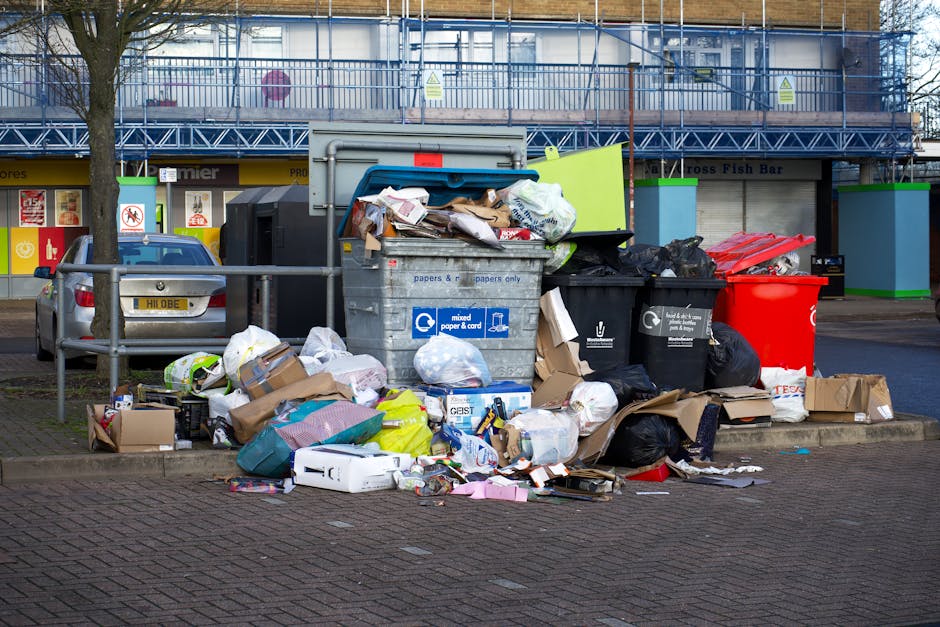
Village centre bulky rubbish collection West Byfleet options

If you live or work near the village centre and a bulky item has suddenly become the thing everyone has to step around, you are not alone. Old sofas, broken wardrobes, exercise bikes that no longer exercise anyone, and the sort of misc. clutter that seems to grow in a corner can become a proper nuisance quickly. This guide on Village centre bulky rubbish collection West Byfleet options walks through the realistic choices, how the process usually works, what to watch out for, and how to pick the option that fits your schedule, access, and budget without turning the whole thing into a weekend saga.
Truth be told, bulky rubbish is rarely just about rubbish. It can be about access through narrow hallways, tight parking, neighbours, speed, and whether you want the job handled with as little disruption as possible. Let's make the decision easier.
- Why it matters
- How it works
- Key benefits and practical advantages
- Who this is for and when it makes sense
- Step-by-step guidance
- Expert tips for better results
- Common mistakes to avoid
- Tools, resources and recommendations
- Law, compliance and best practice
- Options and comparison table
- Case study or real-world example
- Practical checklist
- Frequently asked questions
Why Village centre bulky rubbish collection West Byfleet options Matters
The village centre has its own practical rhythm. People are coming and going, parking spaces can be limited, and access may be awkward at peak times. So when a bulky item needs removing, the "just get rid of it somehow" approach can create more hassle than relief. The right collection option protects your time, keeps walkways clear, and helps you avoid the sort of awkward, last-minute lifting that tends to end with a strained back and a grumpy neighbour.
Choosing well also matters because bulky waste is not the same as general household rubbish. A mattress, wardrobe, fridge, office desk, or pile of old mixed items often needs a different handling approach than bagged waste. Some things can be reused, some can be recycled, and some need careful disposal. In a local area like West Byfleet, that difference can affect how quickly the job is done, how much space is needed, and whether you need to sort items before collection.
There is also a customer-experience angle. If you are a homeowner preparing for redecorating, a landlord turning over a property, or a small business clearing storage, the last thing you want is an inefficient service that leaves half the mess behind. A clean, clearly planned bulky collection can save a surprising amount of stress. And yes, the calm feeling when the last bulky item disappears is real. You can hear the room again.
Expert takeaway: the best option is not always the cheapest or the fastest. It is the one that fits the item type, access conditions, and urgency with the least risk of delay or extra handling.
How Village centre bulky rubbish collection West Byfleet options Works
Most bulky rubbish collection services follow a similar pattern, although the details vary. First, you identify what needs removing. Then you decide whether the items can be collected from inside the property, from the kerb, or from a more convenient access point. After that, you book a time, confirm what is included, and make sure the route is clear on the day. Simple on paper. Slightly more chaotic in real life if the wardrobe is wedged behind a door that opens the wrong way.
In practice, the process usually comes down to three questions:
- What exactly needs to go?
- How easy is it to reach?
- How quickly do you need it gone?
If you answer those clearly, the collection option becomes much easier to compare. Some people only need one or two large items taken away. Others are dealing with a garage, loft, flat, or office room full of mixed bulky waste. That is where a service such as waste removal can be useful, because it suits a wider mix of items than a one-off hard-waste pickup.
There is also a practical difference between standard household rubbish and bulky items that may need dismantling. A large wardrobe may be removed as a single object, or it may need to be broken down first if access is tight. That is not a failure of the service. It is just the reality of moving large items through small spaces, especially in older buildings or compact village-centre properties.
For furniture-heavy clearouts, it can help to compare dedicated services such as furniture clearance and furniture disposal. The difference sounds subtle, but it matters. One focuses more on removal as a practical job; the other places more emphasis on what happens to the item afterwards.
What usually happens on collection day
On the day itself, a good collection tends to follow a simple rhythm: arrival, quick check of access and items, removal, loading, and a final sweep-up if included. If the job has been described accurately in advance, the whole thing can be straightforward. If not, delays can happen because the team may need to assess weight, break items down, or move items through a different route than expected.
That is why photos can help. A quick image of the item, the hallway, or the access point tells more than a long message ever will. A slightly messy photo, by the way, is fine. Nobody expects showroom conditions.
Key Benefits and Practical Advantages
The obvious benefit is that the bulky item disappears. But the real value is wider than that. A well-chosen village centre bulky collection option can make your property safer, neater, and easier to use again. It can also reduce the temptation to shove things into corners "for now", which is how clutter quietly turns into a permanent feature of the room.
- Less physical strain: you avoid lifting heavy or awkward objects yourself.
- Faster turnaround: the space becomes usable again sooner.
- Cleaner presentation: useful for landlords, sellers, and businesses.
- Better sorting: reusable, recyclable, and residual waste can be handled more thoughtfully.
- Reduced disruption: especially important in the village centre where access may be tighter.
- More predictable planning: a booked collection is easier to organise than a last-minute trip to a disposal site.
Another practical advantage is that bulky collection often saves hidden time. It is not just the hour spent moving the item. It is the time spent borrowing a van, finding help, wrapping it, unloading it, and then figuring out what to do next. By the time you have made three trips and eaten a sandwich in the car park, the day is gone.
For mixed clearouts, services such as home clearance or house clearance can be a better fit than a narrow bulky-item collection. That is especially true if the room contains a combination of furniture, bags, broken items, and odd bits that do not fit neatly into one category.
Who This Is For and When It Makes Sense
Not every situation needs the same answer. A single broken bed frame is a different job from clearing a loft after a move. Still, there are some clear situations where bulky rubbish collection makes the most sense.
Typical readers and use cases
- Homeowners: replacing furniture, removing old appliances, or clearing unwanted clutter.
- Tenants: leaving a property in good order before the end of a tenancy.
- Landlords and agents: preparing a property between occupiers.
- Small businesses: clearing stock room items, office furniture, or old equipment.
- People downsizing: deciding what can move with them and what needs to go.
- Garden and garage declutters: dealing with bulky, awkward, or weather-worn items.
It can also make sense if access is simply too awkward for a casual DIY removal. In village-centre streets, parking, narrow paths, and shared entrances can make a "quick do-it-yourself run" much less quick. If you have ever tried to steer a mattress around a stairwell while the front door keeps springing shut, you will know the feeling. Not fun.
For outbuildings and storage-heavy spaces, related services like garage clearance and loft clearance are often worth considering. They help when the issue is not one item, but a cluster of bulky items plus the smaller things hiding around them.
For businesses, the same thinking applies. If you are removing desks, shelving, packaging, or mixed office clutter, then office clearance may be more appropriate than a general ad-hoc collection. That saves time and usually keeps the process tidier.
Step-by-Step Guidance
If you want the process to go smoothly, do not start by moving everything. Start by identifying exactly what you have. That simple step avoids a lot of back-and-forth later.
1. List the bulky items clearly
Write down each item or take a few photos. Include size, weight if known, and whether anything is dismantled. A sofa is not just a sofa if it has a sleeper mechanism, for example. Old bikes, filing cabinets, wardrobes, mattresses, exercise machines, and garden furniture all bring their own quirks.
2. Check access
Ask yourself: can the item move through the hallway, lift, stairwell, garden gate, or car park? If the answer is "maybe", mention that before booking. Access can change the whole job. A narrow passage or top-floor flat can mean more labour, more time, or a different removal method.
3. Decide whether sorting is needed
Some items can go together. Others should be separated. Wood, metal, textiles, and electrical items may be handled differently. You do not need to overthink every screw and bracket, but separating obvious categories helps.
4. Choose the collection type that fits
If you have one or two bulky items, a straightforward collection may be enough. If you are dealing with mixed rubbish, damaged furniture, or a more substantial clearout, a broader waste service may be better. For building-related waste, builders waste clearance can be the more relevant option.
5. Confirm timing and expectations
Ask when the team will arrive, what is included, and whether items need to be outside or can be collected from inside. This avoids the classic problem of standing at the window wondering whether the van was meant to park on the road or in the lay-by. A small detail, but a big one.
6. Prepare the space
Move smaller loose items away from the path, protect floors if needed, and make sure pets and children are not in the way. If the area is busy, leave yourself a clear route. A tidy path makes bulky removal calmer and faster.
7. Check what happens after collection
If sustainability matters to you, ask how items are sorted. Reuse and recycling are not always possible, but they should be considered where practical. A service with a sensible recycling approach can help reduce waste that ends up going straight to disposal.
Expert Tips for Better Results
Here is the short version: make the job easy to understand before it starts. Most delays come from uncertainty, not from the lifting itself.
- Send clear photos. One photo of the item and one of access is often enough.
- Measure awkward items. Height, width, and depth matter more than you think.
- Point out hazards. Broken glass, sharp edges, heavy drawers, or unstable stacking all need to be flagged.
- Group items by room. It saves time when a property has more than one bulky area.
- Keep a "remove first" pile separate. Otherwise the one sofa becomes "the sofa plus everything on the sofa". Classic.
- Ask about reuse options. If an item is still decent, it may be suitable for recovery rather than disposal.
A useful little trick: if you are unsure whether something counts as bulky waste or general rubbish, assume it is bulky until checked. That is safer and usually leads to a more accurate quote or booking. Also, if there is a wardrobe involved, there is almost always one screw you did not know existed. It happens.
For mixed domestic clearouts, related services such as flat clearance can be especially handy where stairs, shared access, or compact rooms make standard lifting less practical. If you are clearing outdoor clutter too, garden clearance may help with broken planters, old fencing offcuts, or bulky outdoor debris.
Common Mistakes to Avoid
Most people do not get this wrong in dramatic ways. The mistakes are usually small and very normal. But small errors can cause unnecessary delay or cost.
- Under-describing the items: "just a few bits" is not very helpful if one of those bits is a piano-sized cabinet.
- Ignoring access constraints: tight turns, stairs, parking rules, and shared entrances all matter.
- Leaving mixed waste unsorted: this can slow the collection down and complicate handling.
- Forgetting electrical items: anything with a plug or battery may need special handling.
- Waiting until the last minute: the closer you leave it to a move-out or inspection, the less flexible things become.
- Choosing only by price: the cheapest quote is not always the best value if it creates extra hassle later.
Another common slip is assuming a bulky collection will solve a bigger clearout. Sometimes it does, but not always. If the room is full of furniture, boxes, and the odd pile of "I'll deal with that later", then a more complete service may save time overall. That is where garage clearance, loft clearance, or house clearance can be more effective than trying to force everything into one category.
Tools, Resources and Recommendations
You do not need much to organise a bulky collection well, but a few simple tools make the process smoother. Nothing fancy. A phone camera, a tape measure, and a notepad are often enough.
| Tool or resource | Why it helps | Best for |
|---|---|---|
| Phone photos | Shows item size, condition, and access clearly | Quick booking and accurate quoting |
| Tape measure | Helps check whether items fit through doors or gates | Awkward furniture and tight spaces |
| Simple checklist | Keeps the job organised and reduces missed items | Multi-room clearouts |
| Disassembly tools | Useful for flat-pack, beds, and modular furniture | Smaller properties with limited access |
| Protective gloves | Useful for handling rough edges or dusty items | Sorting before collection |
On the service side, it can help to look at a provider's broader capabilities. If they also handle garage clearance, office clearance, or business waste removal, that is often a sign they are used to mixed and slightly awkward jobs. That does not guarantee anything by itself, of course, but it can be a useful clue.
For people who value careful handling, service pages on insurance and safety and health and safety policy can also be reassuring. You are not looking for jargon. You are looking for signs that the work is planned, sensible, and managed with care.
Law, Compliance, Standards, or Best Practice
Bulky rubbish collection is not just a matter of moving things out of the way. In the UK, waste has to be handled responsibly, and reputable operators should follow the relevant duties around transport, disposal, and environmental care. You do not need to become a waste law expert, but you should expect basic professionalism.
As a customer, the practical version is simple: ask how the waste will be handled, whether reusable items are separated where practical, and whether the service is insured and set up safely. If a provider cannot explain its process in plain English, that is worth pausing over.
For households and businesses alike, best practice usually includes:
- clear descriptions of items before collection
- safe lifting and handling methods
- responsible sorting where appropriate
- careful transport and loading
- proper disposal or recovery routes
It also makes sense to check the terms of service, payment approach, and complaint process if you are booking anything significant. Those details are not glamorous, but they matter. You can review the provider's terms and conditions, payment and security, and complaints procedure before booking if you want that extra bit of confidence.
For environmentally aware customers, a recycling-first mindset is also sensible. See whether the provider explains its approach to recycling and sustainability. Not every item can be reused or recycled, but a thoughtful approach is still the right expectation.
Options, Methods, or Comparison Table
If you are weighing up Village centre bulky rubbish collection West Byfleet options, the best choice usually depends on item type, urgency, and access. Here is a practical comparison of the main routes people consider.
| Option | Best for | Strengths | Watch-outs |
|---|---|---|---|
| One-off bulky item collection | Single large items or a small number of pieces | Quick, simple, low disruption | Less suitable for mixed or very large clearouts |
| Furniture-specific clearance | Sofas, beds, wardrobes, tables | Good for household furniture and reusable items | May not suit mixed waste |
| General waste removal | Mixed bulky rubbish and assorted clutter | Flexible and practical | Needs clearer item descriptions |
| Room-by-room clearance | Lofts, garages, flats, offices | Better for larger or more awkward jobs | May take more planning |
| DIY removal | Very small jobs with good access | Can seem cheaper upfront | Time, transport, lifting risk, and disposal hassle |
If the job is tidy and narrow in scope, a focused collection works well. If the job has drifted into "several categories of stuff", a broader service is usually the less stressful path. In our experience, once people start describing a job as "a few bits, a shelf, two chairs, and possibly the old printer", the broader option tends to win.
Case Study or Real-World Example
A typical village-centre scenario goes something like this. A couple is refurbishing a front room and needs an old sofa, a broken coffee table, and a heavy sideboard removed before the carpet fitter arrives. The hallway is narrow, the front step is awkward, and parking is not exactly generous. They first think about hiring a van and doing it themselves on a Saturday morning.
Then they measure the sideboard and realise it will not comfortably turn in the hallway without dismantling. That changes the plan.
Instead, they book a collection with photos showing the items and the access route. On the day, the team removes the sofa and table quickly, then deals with the sideboard in a safer way after checking the fittings. The room is clear in one visit, the fitters can start on time, and the couple avoids spending half the weekend wrestling with timber dust and door frames. Not glamorous, but very effective.
The useful lesson is that the right option is often the one that prevents a small job from becoming a chain of little problems. A bit of planning up front saves hassle later. Always.
Practical Checklist
Use this simple checklist before booking any Village centre bulky rubbish collection West Byfleet options service.
- List every item that needs removing.
- Take clear photos from different angles.
- Measure the largest or most awkward pieces.
- Check stairs, doors, gates, and parking access.
- Separate obvious recyclables, where practical.
- Decide whether items need dismantling first.
- Confirm the collection window and location.
- Ask what is included in the service.
- Review payment, terms, and complaint information.
- Make sure the access route is clear on the day.
- Keep pets, children, and loose clutter out of the way.
- Ask about reuse or recycling where relevant.
If you can tick most of those off, the job is usually in good shape. A little preparation really does go a long way here.
Get a free quote today and see how much you can save.
Conclusion
The best Village centre bulky rubbish collection West Byfleet options are the ones that match your actual situation, not just the headline price or the fastest promise. One bulky item, a packed loft, a mixed furniture clearout, or a business room full of old equipment each call for a slightly different approach. Once you know what you are dealing with, the choice becomes far easier.
If you want a smooth result, focus on clear item descriptions, access, timing, and sensible handling. That combination takes most of the stress out of the process and leaves you with the thing you really wanted in the first place: usable space.
And honestly, there is something satisfying about seeing a room breathe again. A bit of daylight, a bit of floor space, less visual noise. Simple, but it makes a home or workplace feel lighter.
Frequently Asked Questions
What counts as bulky rubbish in West Byfleet village centre?
Bulky rubbish usually means items that are too large, heavy, or awkward for normal household waste collection. Common examples include sofas, mattresses, wardrobes, beds, tables, office furniture, and large garden items. If you have to twist, drag, or dismantle something to move it, it is probably in bulky territory.
Is bulky rubbish collection better than hiring a skip?
It depends on access, volume, and how much you want to do yourself. A skip can work for ongoing or larger projects, but it often needs space, loading effort, and sometimes permits. A bulky collection is usually better when you want the items removed for you with less manual work.
Can I book a collection for just one item?
Yes, that is often possible. One-item collections are common for sofas, beds, washing machines, or wardrobes. The key is to describe the item clearly and mention if it is unusually heavy, partly dismantled, or difficult to reach.
Do I need to move the bulky item outside first?
Not always. Some services collect from inside the property, while others prefer items to be ready at the entrance or another accessible point. The best move is to confirm this before booking, especially if stairs or tight hallways are involved.
How do I know which collection option is right for me?
Start by asking whether you have one item, several items, or a mixed clearout. If it is just a sofa or a bed, a focused collection may be enough. If the job includes multiple rooms, garages, loft contents, or mixed waste, a broader clearance service is usually more practical.
What should I do before the team arrives?
Clear the route, separate items you want removed, and make sure the access point is open. It also helps to remove smaller clutter around the bulky item so the team can work quickly. A little prep makes a noticeable difference.
Are reusable items handled differently?
Often, yes. If an item is in decent condition, it may be suitable for reuse or recovery rather than disposal. Not every item will qualify, but it is worth asking about. Reuse is usually better than sending everything straight to disposal when practical.
What if my item is awkward or needs dismantling?
That is very common. Many bulky items need partial dismantling to fit through doors, stairs, or tight corridors. Mention this in advance so the service can plan properly. It is much easier than discovering it on the doorstep.
Is bulky rubbish collection suitable for offices and shops?
Yes, especially when you are removing desks, chairs, shelving, archive units, or mixed waste from a workspace. In those cases, an office or business waste service may be the better fit because it is designed for commercial jobs and more structured clearouts.
How can I reduce the cost of a bulky collection?
Be accurate about what needs removing, group items together, and make access as easy as possible. The clearer the job, the fewer surprises there are. Sorting items before collection can also help avoid extra time on site.
What if I am not sure whether something can be collected?
Take a photo and ask before booking. That is the safest route. Items with electrical parts, heavy metal frames, hidden fixings, or breakable components can sometimes need special handling. When in doubt, it is better to check than assume.
Is there a best time to arrange bulky rubbish collection?
For many people, earlier is better, especially if you are working around a move, a delivery, or renovation work. Midweek can sometimes be easier for access than a busy weekend, but the right timing really depends on your schedule and how urgent the removal is.